
 Joseph Libowsky,
former Special Agent
Key Takeaways
This article was written with the assistance of Police Officer Scott Savage. Officer Savage works for a Police Department in Northern California and is the owner of the Savage Training Group, which provides professional training for law enforcement officers.
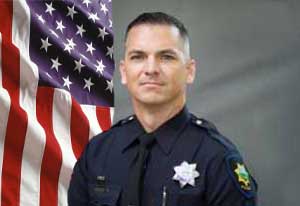 If you are wondering what does it take to be a cop, working as a Police Officer in the Recruiting and Hiring Unit, I can tell you that the law enforcement hiring process hasn’t really changed much over the years. While the police officer requirements will vary by state and by agency, the hiring process agencies are currently using is pretty universal. There are lots of different law enforcement jobs available, and a variety of paths for different law enforcement careers. If you apply for any of the various jobs in law enforcement, you will be going through a process similar to that outlined below.
Written Exam
The law enforcement entrance exam used by the agency you are applying with will be determined by the state you are located in, and the law enforcement entrance exam that has been selected by that agency, The written test used by many agencies in California is called the PELLETB Test, which is a test designed to measure your comprehension of the English language. That’s really all the PELLET B Test evaluates. So, picture a question such as, which of these sentences makes more sense? Or what is the point of this sentence? What is the writer trying to say? The test is trying to determine if you can read and understand the English language. It has nothing to do with, are you going to be a good police officer, or laws, or anything like that.
Physical Agility Test
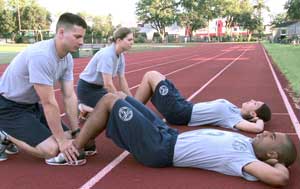 After passing the written test, the next thing you do is a physical agility test. Here in California, they call it the WSPB, Work Sample Test Battery. If you’ve ever seen videos about Navy SEALs going through hell week and going through BUD/S, picture the opposite of that. It’s nothing like that in the world. It is pretty simple. It’s pretty darn easy to pass this test, to be honest.
When I first took the physical agility test when I was becoming a police officer in 1999, I was 25.
Then I took the test just a few years ago with the agency that I am currently with, I was 45 years old, and passed the physical agility test. I could pass it right now as well. If you’re thinking about becoming a police officer, you have to at least be able to pass this test with flying colors. Because I can tell you quite plainly, the Police Academy is much more difficult than the physical agility you take to get hired. And the real life work, even more importantly, the real life work on the street is much more physically challenging than physical agility. So don’t take those physical agility tests and think, “Oh cool. I am in shape enough to pass the academy and be a cop.”
So you take the written, take the physical agility test, and get your scores. That allows you to now apply at whatever agency that is hiring. You turn in your scores, submit your resume, submit your proof of educational requirements, whatever had to be met for whatever agency you’re putting in for. And you for when you are scheduled for an oral interview.
Oral Interview
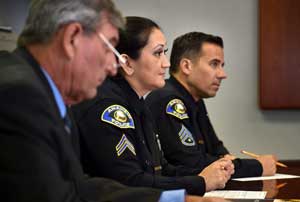 The oral interview that our agencies gives candidates is about six questions with a scenario at the end. Maybe around a half hour to 45 minutes long.
My advice for you if you’re trying to prepare to become a police officer and you’ve now selected a place you want to apply, is do a ton of research and rehearsal. Research meaning figure out everything there is to know about this agency that you can get your hands on. And that means scouring the internet for any videos or documents. That means going on the social media pages. That means interviewing any officer who will talk to you about their experiences, what specialties the agency has. So that was research.
Police Interview Preparation
The preparation, or rehearsal, as you might refer to it, would be practice being really, really good at each aspect of the application process. The Police Academy will teach you how to shoot, it will teach you criminal law, it will teach you all that stuff. But you’re nowhere near that yet. You’re going to have to negotiate all those steps that it takes to get hired. For instance, the oral interview. The initial oral board interview is oftentimes the gate between you and anything else that’s going to happen in that process. I have witnessed dozens and dozens of people take the oral interview, and I have been just absolutely dismayed by the lack of preparation that some people have put into it.
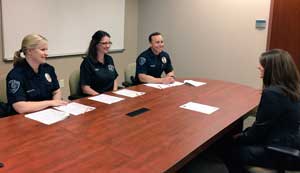 Many people focus on the police interview scenario questions. There isn’t necessarily a right or wrong answer to the scenario questions. The purpose of these questions is to determine the candidates ability to access a situation, evaluate the possible actions that can be taken, then then most importantly, explain to the board not just the action they would take, but articulate their reasoning process for having made that decision. Often, being able to explain your decision making process is the most important aspect of answering the question.
One of the police interview questions you’re going to face, no matter what agency you put in for, it’s going to be this. Why do you want to work at this … agency, and what have you done to prepare? And another question, to rephrase, would be, what do you know about our agency? I guarantee those questions in some form are going to be on that interview. You better have an outstanding answer for that, because you’re basically raising your hand and saying, “Hey, I want to do 30 years working at your agency in one of the most high liability, high scrutiny jobs, where I may have to kill someone, someone might try to kill me.” You’re raising your hand saying you’re prepared to do that. I want to hear a rockstar answer coming from you on why we should hire you and what you know about it. If you simply recite a bunch of stuff that was on the webpage, that is not going to do it.
Go to any police agency, look on the website, it’ll say we have this specialty and that specialty. We have motors, we have canine, we have SWAT. We have 40,000 citizens. And if you’re just going to go over site stats to me, that’s not going to be very impressive, it’s something that literally anyone can do. So if you’re just going to parrot back stuff that we put on the internet, that doesn’t in any way show you’re truly prepared. You did a little bit of homework there. I want to hear how you are prepared to make smart decisions. I want to hear how you are prepared to enter into the most high liability job that I know of. And, I want to hear how this agency means something to you. This is the one agency you really want to work for, and how we are different than our neighboring agency. Because we both have SWAT, canine, traffic. Tell me how we’re different to you, and really why us? And if the answer is simply, I looked around for police jobs near me and “You guys are hiring. To be honest, I’m putting in for other places too.” That’s fine. Don’t lie. I don’t know that that’s going to necessarily endear you to anyone that’s trying to hire you. So I just would really encourage you to, I just can’t say it enough, research and then rehearse.
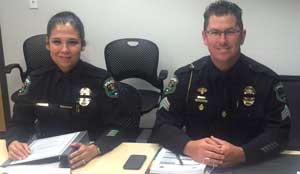 So, how else can you rehearse? Well, those questions I just gave you, I’m hoping you are practicing those. You’ve got cue cards in your bathroom, you are asking your family members to interview you. Here’s a good one. Set up your cell phone camera filming you. Have someone ask you a bunch of questions, and then watch the video of you answering those questions. It will be very difficult to watch. No one likes to watch themselves. Count how many times you say “um.” Count how many times you drift off. Count how many tangents you went down. Now, go back and see if you can give us all those answers in a concise three minute format.
So for instance, when someone says, “Why should we hire you to be a police officer for the city of …?” As opposed to starting it with? “Well, it all started when I was four. I was born, I was four, I had my uncle and he was a cop, and was a really good dude and he really told…” And you’re going on this long story. Now the interview panel is thinking, where is this going? And am I supposed to write down all the stuff this person is saying? Versus, if you put yourself in the perspective of the interview panel and say something like this. “The reason you should hire me to be a police officer, my education, my experience, and my leadership qualities. Now let me tell you about each one of those. Education. I have a bachelor’s degree in criminal justice and I’m working on my master’s degree in … Experience. Let me tell you about that. I did five years in the United States Army where I was honorably discharged, and I have been an intern at XYZ police agency. And my leadership skills.” See how I’m giving you bullet points and I’m filling in the blanks. That makes it easy on the interview panel to take notes. To actually take notes and understand what you’re saying. If you’re going to tell a long tale, you’re basically eating up a lot of time, and you’re hoping that the interview panel is going to be able to follow that. But what they’re looking to do is take quick notes. Oh, he said military. Oh, he said degree. Oh, he said this and that. So I would encourage you to talk in a way that lends itself to quick notes being taken, stuff that’s bullet pointed, and then go back and fill in the blanks. Because if you talk in bullet points, here’s my education, my experience, my leadership qualities, at a minimum, if you don’t say anything else after that, if you forget everything, you didn’t get to the end, they call time or whatever, they’ve already written those things down.
Police Background
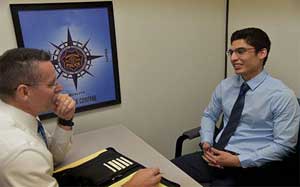 In California, the police background that starts with you filling out a Personal History Statement which is a questionnaire that has to be about a 100 pages long. Picture confessing all your sins in this document. You’re going to tell us all the horrible things you’ve done. And you fill out this document and the agency looks it over, makes sure there’s no glaring issues there, such as drug use, that would be outside of their acceptable policy. Then you sit down with a background investigator, and then your multiple months background investigation starts where they interview your family, your friends, your neighbors. They look at whatever city you’ve ever lived in and conduct records requests of that local police agency, seeing if you’ve ever been stopped or contacted by the police, those types of stuff. You won’t always know what will disqualify you from being a police officer. However, not being truthful on your police background check will automatically disqualify you. So it is important to be honest and complete with all of the information you provide.
After that, then it’s off to the polygraph and off to the psychologist. The polygraph is just like you see in the movies. They ask you police polygraph questions and see if you are giving results not showing deception, because there is no such machine that can measure deception, but it measures a physiological stress response. That’s all.
Psychological Exam
 Then you’re off to the psychologist’s exam for the police psych test. You’re going to fill out something like a 500 to 600 question scantron asking probably 20 to 30 questions that have just been rephrased many, many times. And those questions are things like, I sometimes have thoughts that are best kept to myself. Yes or no. I would rather be a race car driver than a librarian. Yes or no. It’s just really off the wall kinds of questions. And what they’re determining there is a suitability for law enforcement work based on profiles that have been developed by psychologists. So what is the profile we looking for in a police officer? A person who’s assertive, a person who has a sense of justice and righteousness, a person who has anger control and temper control, that type of stuff.
Medical Exam
 After that, it is a completion of your background process, and now we are going to look at your medical profiles. So you will sign a bunch of waivers saying that we can access your medical records. And for anyone that has any kind of medical history, they’re a little concerned about showing that to people. Don’t worry. We’re only looking for things that would make you ineligible for hire. So things like certain diseases or that kind of stuff, you can elect to not have that shown. And so really, just looking for some sort of injury pattern that would make you ineligible. S,o if you had a previous cancer diagnosis or you had a communicable disease or something like that, that’s not going to make you ineligible in any way.
The Chief’s Interview
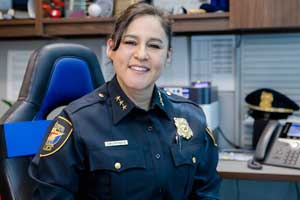 After that comes the chief’s oral, where you sit down with the Chief of Police or captains or some high ranking executive officers, and they’re now having a suitability interview. Just going through stuff with you, getting to know you. And then if that all works out, you are given a job offer. You’re hired. You’re outfitted with equipment. If you haven’t been in the Academy, you’ll be sent to the academy then. If you’re a new hire, you’re going to the academy, which is just another testing process. Coming out of that and going to field training officer phase, which is another testing process. And then you’re going into probationary status, which is another testing process. Once you’ve passed all that, then you’re a full fledged law enforcement officer. And that process really hasn’t changed in the last 21 years that I’ve been doing it, because we’re doing the exact same thing today.
Let’s say you have all the education, you’ve got a great background, everyone’s telling you you’re going to make up wonderful police officer. That’s all good and well. But if you don’t do well on the initial oral interview, there’s a good chance you’re not going on to whatever next steps there are next, so you’re not going to be a cop, you are not going to get any of the police jobs that you are applying for. I think candidates often don’t respect how difficult it is to interview. I don’t know many people that like interviewing. They don’t like that format of being asked questions and having to answer them quickly on the spot. So, just because you don’t like it, you’ve got to lean in. You’ve got to become really, really good at that oral interview phase, because everything else comes after that. The oral interview is always one of the first phases.
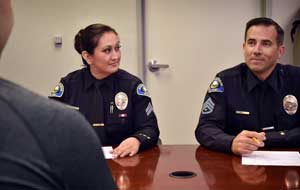 Working in the recruiting and hiring unit, I get to sit on all the panel interviews, either as the actual interviewer or as a proctor, and we have generally field training officers and sergeants as our panel. And I’m just amazed at the lack of preparation that some people put into it, whether it’s their heart’s not in it, maybe they saw the salary. They think it’d be a fun job, but they didn’t really think too much about it. We’ve even had lateral candidates, experienced police officers, who have tried to lateral to get hired with the agency that I’m with. We get them into the oral interview, you’ve read their resumes, these guys are totally experienced cops, totally experienced, probably do very well. They have some friends in the department maybe, and people are speaking highly of them. And they get into the interview panel and they just absolutely bomb. Well, that person is not going on in the process and will not get hired for any of the police department jobs that they are hoping for.
Getting a job as a police officer is a lot more involved than just looking at law enforcement jobs near me, it is about research and preparation. For those candidates that take the time do do their homework, and then put in the effort to rehearse for their interview, they will be rewarded greatly by having a career in law enforcement.
Learn more about Passing the Police Interview.