
This article is based upon an interview with a current 1811 Criminal Investigator (Special Agent) working for a federal law enforcement agency.
What Is an 1811 Special Agent?
 An 1811 is the criminal investigator job code in the federal government. That’s the job code that the Office of Personnel Management (Human Resources) uses for the position. Special agent is the common working title that most 1811s are referred to as. There are a few variations; for example, in the US Marshal Service, they’re called deputy US marshals, although they have the same 1811 categorization.
Almost every federal agency you can think of has an 1811 position. Most agencies have an Office of Inspector General (OIG) and within that office there are 1811 positions who investigate fraud, waste, or abuse. In the federal government there are 73 agencies which have OIGs.
While investigating fraud, waste, and abuse is a mission common to all OIG agencies, there are often additional investigative duties which will vary by agency.
Basic Requirements to Apply as an 1811
Typically, the minimum qualifications are a bachelor’s degree and some relevant experience. It doesn’t necessarily require law enforcement experience, but some relevant experience in the job market is beneficial. With some job announcements, there isn’t the requirement for a bachelor’s degree. In that case, the requirement would be primarily law enforcement experience. Generally speaking, all 1811s generally require at least a bachelor’s degree and some form of experience.
Application and Hiring Process
Every applicant typically goes through the process of submitting an application, usually done on USAJOBS website. Some agencies are authorized to hire directly, without having to go through OPM. After submitting your paperwork, you will go through an initial screening, possibly via an online questionnaire. Usually, after the written exam, you proceed to the interview stage. Some agencies may require a physical fitness exam, but the timing varies; some conduct the physical fitness exam earlier, while others do it later.
Every agency has an interview panel, a physical fitness test, and a background investigation. If you make it through those steps, you’ll proceed to your background phase, which can include a polygraph, medical exam, and psychological test. I’d say the average time for the duration of the hiring process, if everything goes smoothly, is around a year. On the long side, it could be a year and a half to three years or longer.
Training at FLETC and Beyond

ATF Recruits at the Federal Law Enforcement Training Center
Almost all 1811s go to the Criminal Investigator Training Program, commonly referred to as CITP, at the Federal Law Enforcement Training Center (FLETC). FLETC is located in Glynco, Georgia, about an hour north of the Florida/Georgia border near the Atlanta coast. After completing the general criminal investigator program, you’ll go on to the add-on training for the specific agency that you work for. While this is likely to take place at FLETC, your instructors will likely be from your specific agency.
It should be noted that agents from the Drug Enforcement Administration (DEA) and the Federal Bureau of Investigation (FBI) do not attend CITP at FLETC; instead, they attend their own academies.
Traits That Lead to Success
The best way to get information out of people, most of the time, is by being able to relate to them. Whether it’s talking to a witness, a victim, or a subject of the investigation, it’s all the same. Therefore, being personable and being able to get along with people are important traits That skill will help you succeed in the interview stage, the academy, and as a working agent. There are many successful 1811s who possess a unique skill set, such as being a computer expert, an accountant, or a Special Weapons and Tactics (SWAT) or Special Response Team (SRT) member.
Advice for the Interview Process

Secret Service Interview
During the oral board interview, it is vital to make a good impression. The interview is designed to assess your ability to communicate clearly, analyze information, and solve problems. Most interviews are very structured, and interviewers may not be allowed to ask follow-up questions. The interview will be one of the key indicators determining whether you move forward in the process or not.
Practicing for your interview is an import step. It is vital to do several mock interviews to try and simulate the actual interview. However, nothing can truly simulate the actual interview like a real interview.
The only way to become proficient at doing interviews is to do them, and preferably not just one. Failing an interview will not be held against you in future interviews. The more interviews you do, the better you will get.
Pathways Into the 1811 Role
My goal since joining the military was to check off the following boxes. Number one, having a bachelor’s degree. Number two, being a veteran. Number three, having some sort of law enforcement experience. I joined the army at a young age as a military police officer, which made me a veteran. At the same time, I was working towards getting my bachelor’s degree. Eventually, I got hired as an 1811, with a bachelor’s degree, law enforcement experience, and veteran preference. There are many pathways to becoming an 1811 but if you can accomplish those three things your chances will be much better at any agency you apply to.
What Makes the Job Challenging
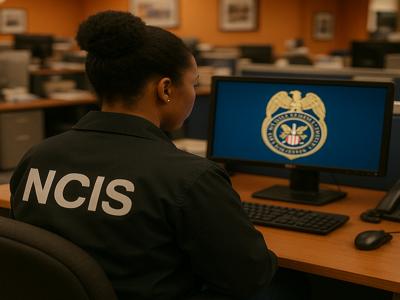
A constantly changing technology environment is a big challenge. Almost every case in some involves the internet or a computer. Therefore, having basic if not advanced computer skills is a must.
Most agents have multiple cases, multiple subjects, all at different stages of the investigation. A good case agent can juggle a variety of cases and keep tabs on everything. You must be detail-oriented, have a good memory, and be skilled at taking notes and updating cases.
If you are the primary case agent, then most of the decisions regarding that case are going to be up to you. You are the one that is going to have to testify on that case if it goes to trial. Once the case goes to prosecution, the Assistant US Attorney becomes lead and your job is to assist them in anyway possible for a successful conviction.
Clearing Up Common Misconceptions
The biggest misconception based upon TV shows is the level of fieldwork that 1811s do. Most of what you’re doing involves writing subpoenas, conducting record checks, and preparing reports. The administrative tasks can take 10%, 20%, or sometimes almost all of your time. It’s not like in most TV shows or movies, where you get one case and see these people working on that one case throughout the whole movie. You will have multiple cases, all competing for your time.
When people think of 1811 special agents, what probably comes to mind is being an FBI special agent or an NCIS special agent. But those 1811 positions are just a small portion of the 1811 positions that are out there.
Resources for Aspiring Agents

SpecialAgents.org website
The website we have is called specialagents.org, commonly referred to as the Special Agent Blog. It’s not affiliated with any official government agency. It’s an online resource for aspiring 1811s, as well as for current 1811s.
We have agency profiles for most agencies that have 1811 positions. We also offer resources such as training and test prep resources, as well as agency association links.
For anyone considering becoming an 1811 special agent, it is a great resource to learn what the mission is for each of the various federal law enforcement agencies. It is also an invaluable resource for career advice for getting started as an 1811..
Advice to those who want to be an 1811 Special Agent
The most common question I get is “Which agency should I apply to?” My response is to apply to every agency that has an 1811 hiring announcement on USAJOBS. At the very least, it will give you experience navigating the application process, and the interview experience will be invaluable. You may possibly get an 1811 position out of it.
Whichever agency you end up with, it will be a great building block for starting your career. There is a saying that getting a job in the Federal government isn’t a sprint, it’s a marathon. Don’t give up after rejection, be prepared to be in it for the long haul until you get the opportunity to start your career as an 1811 special agent.